
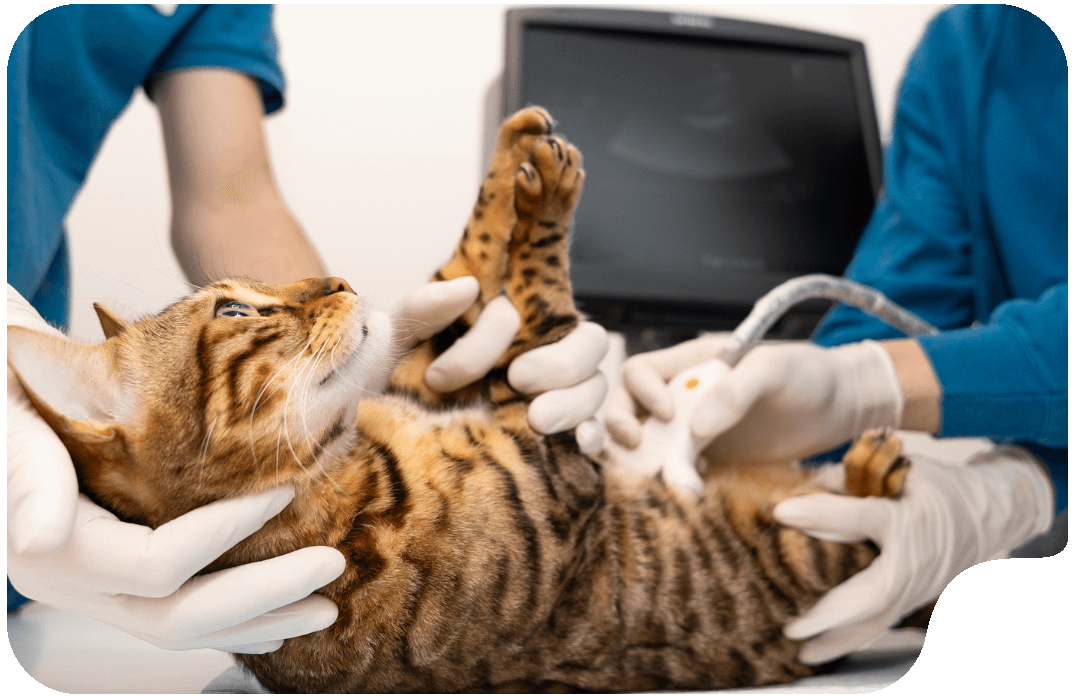
Pet Diagnostics & Imaging in Tracy, CA
Pet Diagnostics & Imaging at Happy Tails Veterinary Hospital in Tracy, CA, provides essential testing to help identify medical concerns in dogs and cats quickly and accurately. Our team uses a combination of laboratory testing and general imaging to guide treatment decisions and ensure each pet receives timely, effective care.
Accurate testing and imaging to better understand your pet’s health needs.
Diagnostic testing plays a crucial role in uncovering underlying health issues and building the right treatment plan. At Happy Tails Veterinary Hospital, we provide essential diagnostics for dogs and cats, including routine bloodwork, urinalysis, fecal testing, and general imaging when needed. These services help us evaluate organ function, assess internal changes, and identify conditions early. Our veterinarians review results carefully and communicate next steps clearly so you always understand your pet’s health picture.

Early Detection
Timely diagnostic testing can help identify illness before symptoms worsen, allowing for earlier treatment and better long-term outcomes for dogs and cats.
Informed Care
Laboratory tests and imaging results guide our veterinarians’ decisions, helping us tailor treatments to match each pet’s unique condition and overall health.

FAQs About Pet Diagnostics & Imaging
Pet owners often have questions about when diagnostic testing is necessary and how results guide care. These FAQs provide helpful context for dogs and cats receiving diagnostic services at Happy Tails Veterinary Hospital in Tracy. They explain common tests, what they reveal, and when pets should be evaluated.
K
L
When does my pet need diagnostic testing?
Pets benefit from diagnostic testing when they show changes in appetite, energy, behavior, or bowel habits. At Happy Tails Veterinary Hospital, we recommend evaluation whenever dogs or cats develop symptoms that may suggest underlying illness.
K
L
What types of diagnostic tests do you offer for pets?
We provide core diagnostic services such as routine bloodwork, fecal tests, urinalysis, and general imaging. These tools help our veterinary team identify infections, organ concerns, and other health changes in dogs and cats.
K
L
How quickly will I receive my pet’s test results?
Result times vary depending on the test. Many routine diagnostics return results quickly, while others may take longer. Our team keeps you informed and explains what each result means for your pet’s care.
K
L
Does diagnostic testing require sedation for my dog or cat?
Most diagnostic procedures, such as blood draws or urine tests, do not require sedation. Sedation is only used when a pet is uncomfortable or when the imaging type requires complete stillness for safety.
K
L
How do diagnostic results help determine treatment?
Diagnostic findings clarify what is happening internally, allowing our veterinarians to choose appropriate treatments, monitor progress, and make informed decisions for your dog or cat’s long-term care.